Olympic-Sized Fuck-up: “Games Ponies Play” review

One of the things I love about My Little Pony is the world building. There’s a lot to the land of Equestria. The locations, the mythology, and the political systems feel quite fleshed out and developed. So much so that Hasbro actually released a full map of Equestria. A map that’s full of inconsistencies.

Map of Equestria

I bring this up because the fact that it can be full of inconsistencies just proves my point. Equestria has been so fleshed out that we all have a pretty common and complete vision of how the land of Equestria is structured, headcanon notwithstanding. And almost every episode has only made it fuller.

…at least, it did in the first two seasons.

For season three, the world building simply hasn’t been as interesting or well done. It’s still there, but it feels half-assed. For starters, there was The Crystal Empire, which was probably the most boring episode, featuring the most boring villain in the entire series: Sombra. It just felt like it’s been done before, especially the ending, where the big challenge for Twilight was: walk down a bunch of stairs, then walk up even more stairs. That’s right, when I think pulse-pumping action, I think stairs. No deceptive puzzles, no complex moral tests, just stairs.

For the rest of the series, we got no major extension to the land of Equestria. Or at least none that were interesting.

Okay, that’s not entirely true. We learned that Princess Luna is Dom Cobb, and that there’s a nation called Saddle Arabia, which is cool, I guess.

But at least none of the world building has been bad this season, just boring. If nothing else, boring is better than bad or contradictory or completely ridiculous, which they’ve thankfully avoided this season… UNTIL NOW!!! Continue reading
Which Reality is Real

A while back I wrote about Inception, a film that featured Leonardo DiCaprio as a thief who specialized in stealing secrets directly from someone’s mind using shared dreaming technology. It still remains one of my favourite movies of all time. But one thing I only briefly mentioned was the idea proposed in the film that it’s easy to lose your sense of reality in the dream world.

It’s an interesting and scary idea. What if you’re dreaming and don’t know it? What if I’m dreaming and don’t know it? Am I really typing away on a keyboard communicating with the world or am I sleeping, in my bed, maybe hooked up to some machine that stimulates a part of my brain, generating hyper-realistic dreams? Well, if that’s true, you’d think I’d dream up a better house.

How do we know we’re awake? I hear one way to tell is to try to keep an eye on space, because dreaming bypasses spacial awareness. But that might not be 100% reliable. I’ve also noticed that, whenever I dream, the colour schemes are simple and bright. An entire room of bright red, or bright blue, which is something you never really see in real life. But that might not be the same for everyone.

So I guess the real answer is: we don’t. We don’t know if we’re awake or asleep. But let’s try to make the best of what we have regardless, because the idea that we live in a simulation is highly unlikely, and honestly, not worth losing sleep over.

Oh, wait… I just made a joke and didn’t notice.

Anyway, nonetheless, some people have lost sleep over it, and Higgs bless ’em, because as a result, we’ve gotten some great works of fiction out of it. There was The Invisables, The Matrix, Vanilla Sky, The Truman Show (in a way), and Total Recall. Even an episode of Stargate SG-1, and two episodes of Doctor Who have dealt with this theme. Is the world we live in real?

The most interesting one is the Doctor Who episode where Amy, Rory, and Eleven are all trapped in the TARDIS, as it hurtles toward a ‘cold star’, while falling asleep at random intervals, dreaming they are back on earth, being chased by aliens…or they are back on earth, being chased by aliens, while falling asleep at random intervals, dreaming they are trapped in the TARDIS, as it hurtles toward a ‘cold star’.

The question they have to answer is simple: Which dream is just a dream, and which one is reality? It forms the basis for the entire episode, as the Doctor argues for the TARDIS reality, and Rory argues for the Leadworth reality, and Amy has to make the tie-breaking decision. Great episode. But what if this same idea wasn’t restricted to a single, 45 minute episode of Doctor Who? What if someone managed to create an entire series based around this simple idea: the idea of not being able to tell the difference between a dream, and reality. Well…someone has. Continue reading

Batman Retires

The first two films in Nolan’s Batman trilogy were bizarre, dark, and fun. We got to see some interesting villains, some fantastic set-design, some exciting fight sequences, some compelling storytelling, and some fascinating ideas.

Why would someone dress as a bat, and beat up street thugs? What kind of training would he need? What kind of equipment would he need? How could he do it?

These are all easily addressed in the films. And thanks to Nolan’s commitment to realism, the entire idea of Batman seems much more plausible, and in turn, much more compelling.

Sadly, by the time the third film rolled around, it seems the well ran dry for interesting villains, fantastic set-design, exciting fight sequences, compelling storytelling, and fascinating ideas. Because while the third film does maintain the realism, themes, and characters of its predecessors. It’s boring as hell. Continue reading

Batman Resurges

Batman, as a concept, isn’t very realistic. But in 2005, Christopher Nolan tried to change that with Batman Begins. He gave the character a logical origin story, and even explained where all of his gear comes from. A man, trained in ninjutsu, inspired by the death of his parents, and with billions of dollars at his disposal, takes down criminals with a persona mirroring his greatest fear: Bats.

It’s a little ridiculous, granted. But it’s a nice attempt. And while the whole thing seems unlikely, it’s also plausible.

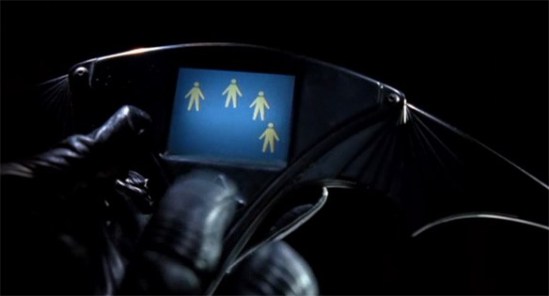
The first film had a bit of a sci-fi element, with the introduction of the Fear Gas, and some of Batman’s gear. I’m pretty sure memory cloth doesn’t actually exist. But nonetheless these elements didn’t seem too ridiculous, or too far outside the realm of possibility. Unlike the Burton series, with the magic automated homing Batarang.

Okay, now you're just fucking with us.

In fact, you know what this reminds me of? James Bond. Now, I’ll admit I haven’t seen every film, because… fuck that. But every film I saw always had the scene in the MI-6 headquarters, where Q introduces 007 to all his gadgets. These were always great scenes. He not only introduces all the gadgets and show what they do, but often explains how they work. Like the invisible car; it has a camera on one side, and the image is projected on the other. It’s pretty cool, even though we actually know that it wouldn’t work since people have tried that and it didn’t. But it’s still pretty cool.

Anyway, in the new Batman films, Morgan Freeman is basically Batman’s Q. And that’s the greatest thing about these films; The fact that even though the gadgets are a bit fantastic, they still feel real, or at least on the cutting-edge. And it’s all thanks to Morgan Freeman, as he gives James Bat his load out. Only instead of a BMW, he gets a tank.

The sci-fi elements in Batman Begins even carried over into the design of Gotham city. Specifically, the designs of the Narrows, the monorail, and Wayne Tower.

I touched on this last time.

They make me think of the classic German expressionist film, Metropolis. (Admittedly, I still have to see that film.) It gives a bit of a how-the-past-thought-the-future-would-look feel. But this film takes place in the present day (I think), and we don’t design buildings like that. Though I wish we did.

Nonetheless, as amazing as the designs are in Batman Begins. For the sequel, Christopher Nolan decided to scrap all of that. Wayne Tower is redesigned into a generic skyscraper, and the monorail is gone. And I think, because of this, the first film had a much better aesthetic. However, that doesn’t really matter, because the second film had a much better everything else. Continue reading

Batman Reboots

The biggest, and most interesting thing about Batman is that despite his ‘superhero’ label; he has no superpowers. He’s just a guy with a lot of gear, fighting criminals. Because of this, he is also one of the most iconic superheroes in history.

I’ve talked about his history before. How his properties have fluctuated in tone, between comic and cheesy, to dark and bitter, and how I approve of both. However, it seems Batman’s most popular portrayals have taken the latter tone over the former.

For some bizarre reason, people, particularly Batman’s most vocal fans, have this knee-jerk desire to insist that Batman be taken seriously. See, they’re forgetting that he’s a superhero, a fantasy character. His closest allies include an Amazon with magical powers, an invincible alien with super strength and x-ray vision, and a fighter pilot with a ring that can conjure any object he wants. His most prevalent enemies include a woman who’s half plant, a seven-hundred-year-old immortal, and a man who can only survive at sub-zero temperatures. Yes, this is a franchise that is begging to be taken seriously.

The first four Batman films did fluctuate in tone, but even the dark and ‘serious’ ones floated on the border near fantasy and absurdity. After all, we have Catwoman coming back from the dead, and the Joker managing to create a toxin that makes people laugh to death.

Anyone who tries to take Batman seriously is obviously fighting a losing battle. Or at least they were, until 2005, when the Batman film franchise was given a fresh coat of paint under the direction of legendary filmmaker, Christopher Nolan. But this time, things were different. This time, Nolan got the franchise to strive for realism… and oddly enough, it worked. Continue reading

Adventures in Pet Sitting: “Just for Sidekicks” review

I think Spike may be my favourite character on My Little Pony: Friendship is Magic.

Recent episodes aside, he’s shown himself to be reliable and trustworthy. If a little oblivious. He cares for those around him, and is always willing to help.

But of course he’s still a dragon, which comes with its own problems. Dragon instincts don’t fly well with the society in which Spike currently resides. Immense greed, an overzealous rigidity to a moral code, and a single-minded hunger for gems can cause quite a bit of conflict when surrounded by those who don’t have the same mentality.

What is a dragon to do?

Well, you try to get by the best you can. But obviously it’s not easy to go against your instincts and basic nature… though it would be nice if he actually tried. I bring this up because on this week’s episode, he doesn’t… at all. Continue reading

Reforming Chaos: “Keep Calm and Flutter On” review

Ideally, the primary purpose of prison is to rehabilitate and reform criminals so they can one day reenter society. Or at least, that’s the idea. Unfortunately, it doesn’t always work out. Often, criminals are released, only to re-offend, somewhere down the line. Even if they seem to have turned over a new leaf.

It’s a sad fact of the criminal justice system. That sometimes, despite our best efforts, some people just can’t be rehabilitated. But that doesn’t mean we shouldn’t try. There’s always a chance that even the most hardened criminals can learn how to behave in the outside world. They can learn that it’s wrong to rob, rape and kill. And this week on My Little Pony, Princess Celestia relies on that idea when she releases Discord from his stone prison. Continue reading

Non-transferable Skills: “Spike at Your Service” review

If you have a job, I must issue you an applause. It must be nice to work, have something to do, and not worry about money too much. I used to have a job, however briefly. Those six weeks I’ve spent working retail I certainly enjoyed, and I wish I could go back, but that’s not happening. I’ve actually spent most of my adult life (since graduating college) unemployed. It’s depressing.

I’d understand if no one wants to give me a break and a chance to prove myself. But I already proved myself, and I think I did a good job…that is, if you ignore my last day, which I shall. So why can’t I get a job? I have the skills, I know modern point-of-sale systems, I know how to sell. Just recently I was at the local pharmacy, and the cashier didn’t know how to use a gift card. Apparently it was her second day, and her trainer was occupied. So, I walked her through it. I knew exactly what to do, just by looking at the screen.

I never lost these skills, and I never will. I can’t! In spite of the fact that I don’t apply them in my daily life today.

Which is why I find the latest episode of My Little Pony so odd, as young Spike forgets every skill he’s ever had, the very moment he starts to work for Applejack. Continue reading